Anne Willems

Postdoc
Read more
Postdoc
Read more
MA, 2017
Read more
MA, Clinical Psychology, 2018
Read more
PhD, 2015
Read more

All mammals form bonds, at least between lactating mother and infant. Oxytocin is key to these processes in rodents and sheep; less is known about its importance for human bonding due to a lack of oxytocin antagonists for human use. Lots of human studies using intranasal oxytocin indicate increased salience of socially relevant cues such as the eye region of human faces. In two ongoing projects, we probe the functional relationship between oxytocin levels and visual attention to others’ eyes:

1. Meta-analysis of intranasal oxytocin effects on gaze to others’ eyes. Due to the low statistical power of most intranasal oxytocin papers, published results are typically mixed, and a publication bias is considered likely. In this project, Runa Jacobsen is summarising the existing literature (and any unpublished data we can find) in several populations: healthy humans, psychiatric groups, dogs gazing at their owners, and other animals’ gaze time to conspecifics’ eyes (preregistration here).
2. Is there anything special about oxytocin and the eyes? Intranasal oxytocin studies in healthy humans. We have also conducted some placebo-controlled, double-blind intranasal oxytocin studies using eye-tracking and photographs to address this question more directly. A lot of people have contributed to design, data collection (Study 1, N=100 between-subjects; Study 2, N=50 within-subjects) and analysis, notably my long-standing collaborator and pharmacologist Lars Westberg, Martin Asperholm, Daniel Hovey and Marie Eikemo (Study 1) as well as Louise Martens, Nils Simonsen, Andreas Dahl (all brilliant interns at LAB lab) and Guro Løseth (Study 2).


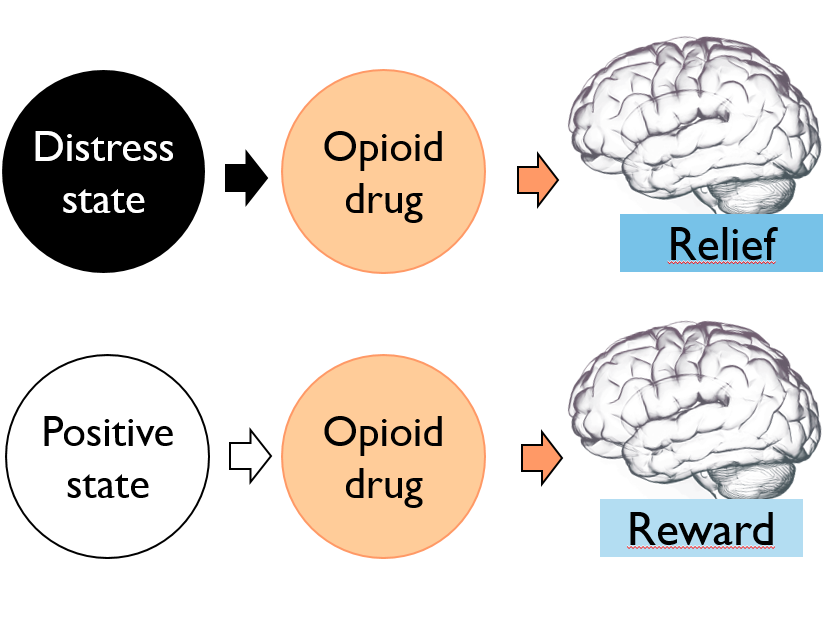
In this ERC-funded project, we hypothesise that addictive drugs have different mechanisms of action depending on how one is feeling before taking the drug. Negative feelings and a wish for relief could underpin the increased risk of addiction observed in people suffering from depression, anxiety, a history of childhood trauma, and poor social support networks.
The project team counts four part-time medical staff, several MA student interns and RAs, one part-time professor (Guido Biele), our long-standing collaborator Tom Johnstone from Swinburne University, as well as the three people who wrote the grant: Marie Eikemo, Guro Løseth and Siri Leknes. Photos from our kick-off event in February 2020 below:




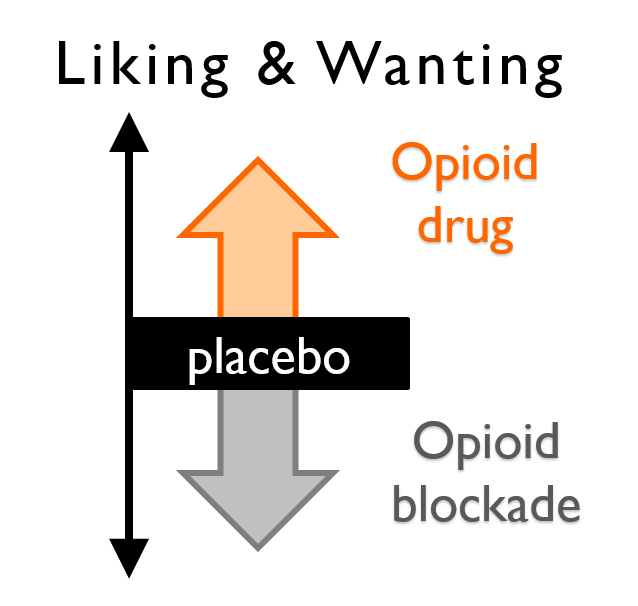
In our first opioid psychopharmacology study, we gave healthy young men pills containing 10 mg morphine to stimulate the µ-opioid receptor; 50 mg naltrexone to block µ- and kappa opioid receptors, and placebo (cherry flavoured breath mints) on three separate days. Marie Eikemo and Guro Løseth were key investigators at all stages of this project, which established LABlab as a psychopharmacology lab, one of a handful labs worldwide which assesses opioid drug effects in the healthy human brain.
As described more fully in the ensuing manuscripts, the data was consistent with the hypothesis that in the healthy human brain, endogenous opioids modulate the reward value and approach motivation of:


Research assistant
Read more
MA student
Read more
MA student
Read more Affective Brain lab