
CannaStress: Do endocannabinoids modulate resilience to stress?
In the face of major stressful life events, some individuals cope well whereas others experience persistent physical and mental distress. How we react to and recover from stress is related to a complex interplay of environmental factors, social circumstances, biological vulnerability, and resilience factors.
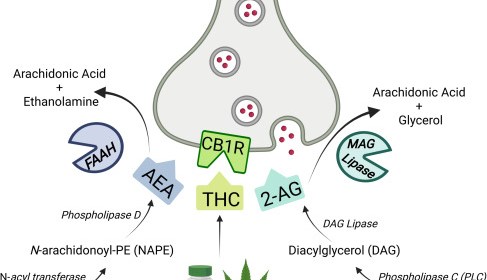
Studies in animals and patient groups with considerable stress burden, such as post-traumatic stress disorder, indicate that the intensity of a stress response and how quickly we recover involves the endocannabinoids, – brain molecules that activate the same brain receptors as cannabis.
In this project, we will investigate how endocannabinoid levels in blood, hair and cerebro-spinal fluid are related to stress coping after acute and prolonged stress, to understand why some individuals are more resilient than others. One part of the project is linked to the NorOp study where we are testing patients undergoing a stressful, yet very common life event: a surgical procedure. We measure perceived stress as well as mental and physical health from the period before the surgery to two years afterward, and test how these measures are related to levels of endocannabinoids among other stress-related molecules. The second part of CannaStress builds on the ERC funded Opioidreward project. We will use data from an experiment where participants were exposed to psychosocial stress to investigate how endocannabinoid levels influence stress responses and whether the stress itself can impact the release of endocannabinoids and other stress hormones such as cortisol. We will also assess the interplay of opioids and endocannabioids.
An overarching goal of the project is to assess whether endocannabinoid measures can be used to tailor prevention strategies as well as treatment and follow-up after substantial life stressors that increase the risk of poor health outcomes.

 Affective Brain lab